

.png)


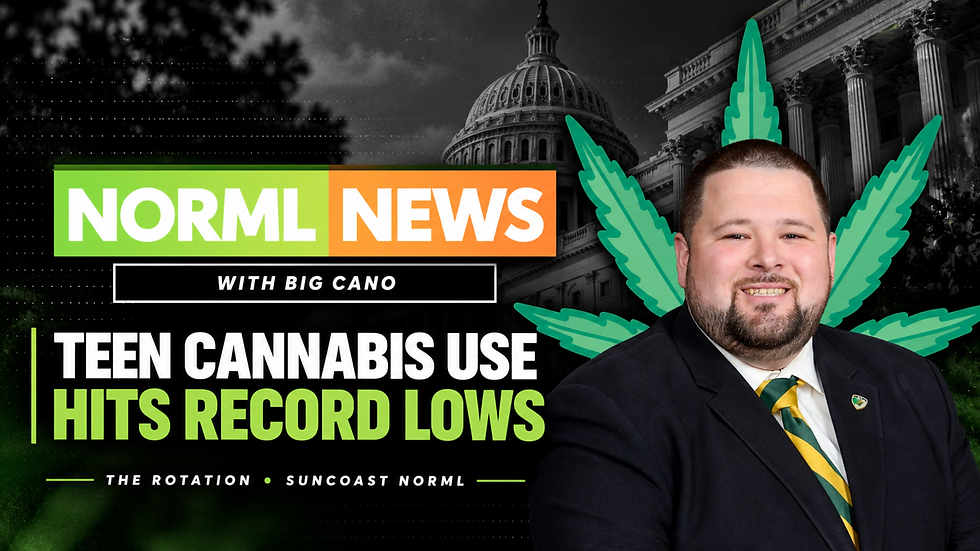
Teen Marijuana Use Hits Record Low as More States Legalize Cannabis for Adults


Federal data are once again challenging one of the most persistent arguments against adult-use cannabis legalization: the claim that reform will cause more teenagers to use marijuana.
According to the 2025 National Survey on Drug Use and Health, 8.7% of adolescents ages 12 to 17 reported using marijuana during the previous year. That is down sharply from 14.2% in 2011—the year before Colorado and Washington became the first states to approve adult-use legalization.
In other words, as legal cannabis access for adults expanded across the United States, reported marijuana use among teenagers did not surge. It fell.
The new findings were first highlighted by Marijuana Moment, based on data released by the federal Substance Abuse and Mental Health Services Administration, or SAMHSA.
What the Latest Federal Marijuana Data Show
SAMHSA’s annual survey is one of the federal government’s most important sources of information about substance use and mental health in the United States. Its 2025 findings show markedly different trends among adolescents and adults.
8.7% of adolescents ages 12–17 reported past-year marijuana use.
That rate was 14.2% in 2011, before any state had implemented adult-use cannabis legalization.
33.7% of young adults ages 18–25 reported past-year marijuana use in 2025.
20.6% of adults age 26 and older reported past-year use.
Across everyone age 12 and older, 21.2%—about 61.6 million people—reported using marijuana within the previous year.
The full federal release and supporting tables are available through SAMHSA’s 2025 NSDUH page.
These figures matter because they separate adult behavior from adolescent behavior. Adults are increasingly choosing cannabis in states where it is legal, but the national teen-use rate has moved in the opposite direction over the longer term.
Legalization Did Not Produce the Predicted Surge in Teen Use
For decades, opponents of cannabis reform warned that legalization for adults would normalize marijuana and lead to substantially more underage consumption. The federal data do not support that prediction.
That does not mean legalization, by itself, caused teen use to decline. National surveys can identify trends, but a simple comparison cannot prove a single cause. Social attitudes, public-health campaigns, parental involvement, changes in youth behavior and other factors may all contribute.
What the data do establish is important: adult-use legalization has expanded dramatically without the nationwide explosion in teen marijuana use that opponents repeatedly forecast.
That distinction should matter whenever lawmakers debate cannabis policy. Public policy should be based on measurable outcomes—not worst-case predictions that fail to materialize.
Why Regulation May Better Protect Young People
Cannabis legalization is intended for adults, not minors. A regulated market can establish safeguards that prohibition cannot reliably provide, including:
Mandatory age verification at licensed retailers
Penalties for selling cannabis to minors
Child-resistant packaging and labeling requirements
Testing standards for legal products
Rules restricting youth-oriented marketing
Dedicated funding for education, prevention and research
An illicit seller does not check identification because the law requires it. A licensed business can lose its license and livelihood for selling to someone underage.
Legalization is not the same as abandoning youth prevention. Done responsibly, it replaces an uncontrolled underground market with an adult-only system that can be monitored, regulated and improved.
Other Research Points in the Same Direction
The 2025 SAMHSA findings are not an isolated result. Multiple studies and state surveys have found that youth marijuana use either declined or did not significantly increase following adult-use legalization.
A 2024 research letter published in JAMA Psychiatry, for example, analyzed federal Youth Risk Behavior Survey responses and found no evidence that recreational marijuana laws increased current or frequent cannabis use among young people.
Recent state data have shown similar patterns. Colorado—the first state to launch legal adult-use sales—reported that past-month marijuana use among high school students fell to 9.7% in 2025, down from 12.8% in 2023 and substantially below its 2011 level.
No single survey ends the policy debate. Together, however, these findings make it increasingly difficult to argue that arresting adults or preserving an illicit cannabis market is necessary to prevent teen use.
What This Means for Florida
Florida’s cannabis debate is often driven by warnings about children. Protecting young people should remain a serious priority—but fear should not replace evidence.
The better question is not whether cannabis exists. It already does. The question is whether adults should obtain it through a regulated, age-restricted system or through an illicit market with no meaningful testing, labeling or identification requirements.
Florida policymakers should examine real-world results from across the country. The latest federal numbers show that adult legalization and falling adolescent use can occur at the same time. That gives lawmakers an opportunity to focus on policies that actually protect youth: honest education, responsible regulation, strict age controls and evidence-based prevention.
The Bottom Line
Teen marijuana use has fallen to a historic low in the era of expanding adult-use legalization. The 2025 federal survey found past-year cannabis use among 12- to 17-year-olds at 8.7%, compared with 14.2% in 2011.
That does not prove legalization caused the decline. It does disprove the claim that legalization inevitably sends teen use soaring.
Cannabis policy should be judged by evidence. Right now, the evidence supports regulation, education and youth safeguards—not a return to the failed assumptions of prohibition.
Frequently Asked Questions
Is teen marijuana use increasing as more states legalize cannabis?
No nationwide increase appears in the latest federal data. SAMHSA reported that 8.7% of adolescents ages 12 to 17 used marijuana in the past year in 2025, down from 14.2% in 2011.
Does the decline prove legalization reduces youth marijuana use?
Not by itself. The figures show a strong national trend, but they do not establish legalization as the sole cause. They do show that expanded adult legalization has not produced the predicted national surge in teen use.
How can legal cannabis regulation help protect minors?
Regulated systems can require identification checks, restrict marketing, mandate safer packaging, test products and penalize licensed businesses that sell to minors—controls that do not exist in an illegal market.
Is recreational marijuana legal in Florida?
Florida permits qualified patients to access medical marijuana through the state program, but adult-use cannabis is not currently legal. Possession outside authorized medical use can still carry criminal penalties.
Source credit: This article is based on federal data published by SAMHSA and reporting by Tom Angell for Marijuana Moment. Suncoast NORML encourages readers to review the original reporting and the federal survey.

Comments